

Editor-in-Chief
Program Leader
Computing and Engineering
University of Derby
United Kingdom


Editor-in-Chief
Assistant Professor
Neuroscience
Duke-NUS Medical School
Singapore

Editor-in-Chief
Director
Cellular and Translational Neuroscience
Maastricht University
Netherlands

Editor-in-Chief
Full Professor
Medicine
University of Bari Aldo Moro
Italy


Editor-Member
Assistant Professor
Electronics and Computational Neuroscience
University of Monastir
Tunisia

Editor-Member
Neurologist
Human Neuroscience
Sapienza University of Rome
Italy

Editor-Member
Associated Professor
Department of Medicine
Georgian National University
Georgia


Editor-Member
Academic Leader
Neurophysiology
Universidad Autonoma Metropolitana
Mexico

Editor-Member
Adjunct Faculty
Department of Pediatrics
Emory University School of Medicine
USA

Editor-Member
AI Research Scientist
Department of Computer Science
California State University, Los Angeles
USA

Editor-Member
Postdoctoral Researcher
Behavioral Neuropharmacology
Fujita Health University
Japan

Editor-Member
Assistant Professor
Pharmacology
Smt Kishoritai Bhoyar College of Pharmacy Kamptee
India

Editor-Member
Professor
Department of Informatics
Ionian University
Greece
Neuroscience and clinical neurology are closely linked fields that share a common focus on understanding and addressing disorders of the nervous system. Neuroscience is a research-based discipline that examines the structure and function of the brain, spinal cord, and peripheral nerves, exploring how they operate at the molecular, cellular, and behavioral levels. This field aims to uncover how biological processes influence cognition, emotions, memory, and learning, and how these processes are disrupted in various neurological conditions. On the other hand, clinical neurology is a medical specialty that applies findings from neuroscience to the diagnosis and treatment of neurological disorders, such as stroke, epilepsy, Parkinson’s disease, multiple sclerosis, and dementia. While neuroscience expands our understanding of how the nervous system works, clinical neurology uses this knowledge to improve patient care through more accurate diagnoses and personalized treatment plans. Together, they play a vital role in advancing the field of brain and nerve health, driving innovation in both research and clinical practice.
Authors may submit their manuscripts through the online Submit Manuscript system or by sending their manuscript as an e-mail attachment to the Editorial Office at editorialoffice@confseries.net.
The Journal of Neuroscience and Clinical Neurology is dedicated to advancing knowledge and innovation in the fields of neuroscience and clinical neurology. The journal provides a platform for researchers, neurologists, clinicians, and healthcare professionals to share original research, clinical insights, reviews, and emerging perspectives that enhance the understanding, diagnosis, prevention, and treatment of neurological and nervous system disorders.
The journal welcomes both basic and clinical research, with a focus on translating advances in neuroscience into improved neurological care. By publishing high-quality peer-reviewed content, the journal aims to bridge the gap between fundamental discoveries and clinical applications, foster interdisciplinary collaboration, and promote advances in neurological health worldwide.
Clinical Neurology – Diagnosis, management, and treatment of neurological disorders.
Neuroscience & Neurobiology – Cellular, molecular, computational, and systems neuroscience.
Neurodegenerative Disorders – Alzheimer’s disease, Parkinson’s disease, Huntington’s disease, ALS, and related neurodegenerative conditions.
Stroke & Cerebrovascular Disorders – Ischemic and hemorrhagic stroke, cerebrovascular diseases, prevention, diagnosis, and rehabilitation.
Epil...
View More →| Journal Title | Journal of Neuroscience and Clinical Neurology |
|---|---|
| ISSN | Updated Soon |
| Frequency | Annual (One issue per year) |
| Starting Year | 2025 |
| Publication Format | Online |
| Language | English |
| Publisher | Confseries Publishing |
| Editor-in-Chief | Dr Oral Oncul |
| Subject | Medical Sciences |
| support@confseries.com | |
| Mobile Number | +91 9666 822 625 |
| Website | https://www.confseries.com/journals/neuroclinical |
| Publisher Address | #58-15-30/3, Shantinagar, NAD-X-Road, Visakhapatnam, Andhra Pradesh - 530009, India. |
The journal follows a structured editorial and peer-review process designed to ensure academic quality, ethical integrity, and a transparent publication process. Each manuscript progresses through clearly defined stages, as illustrated in the workflow below.
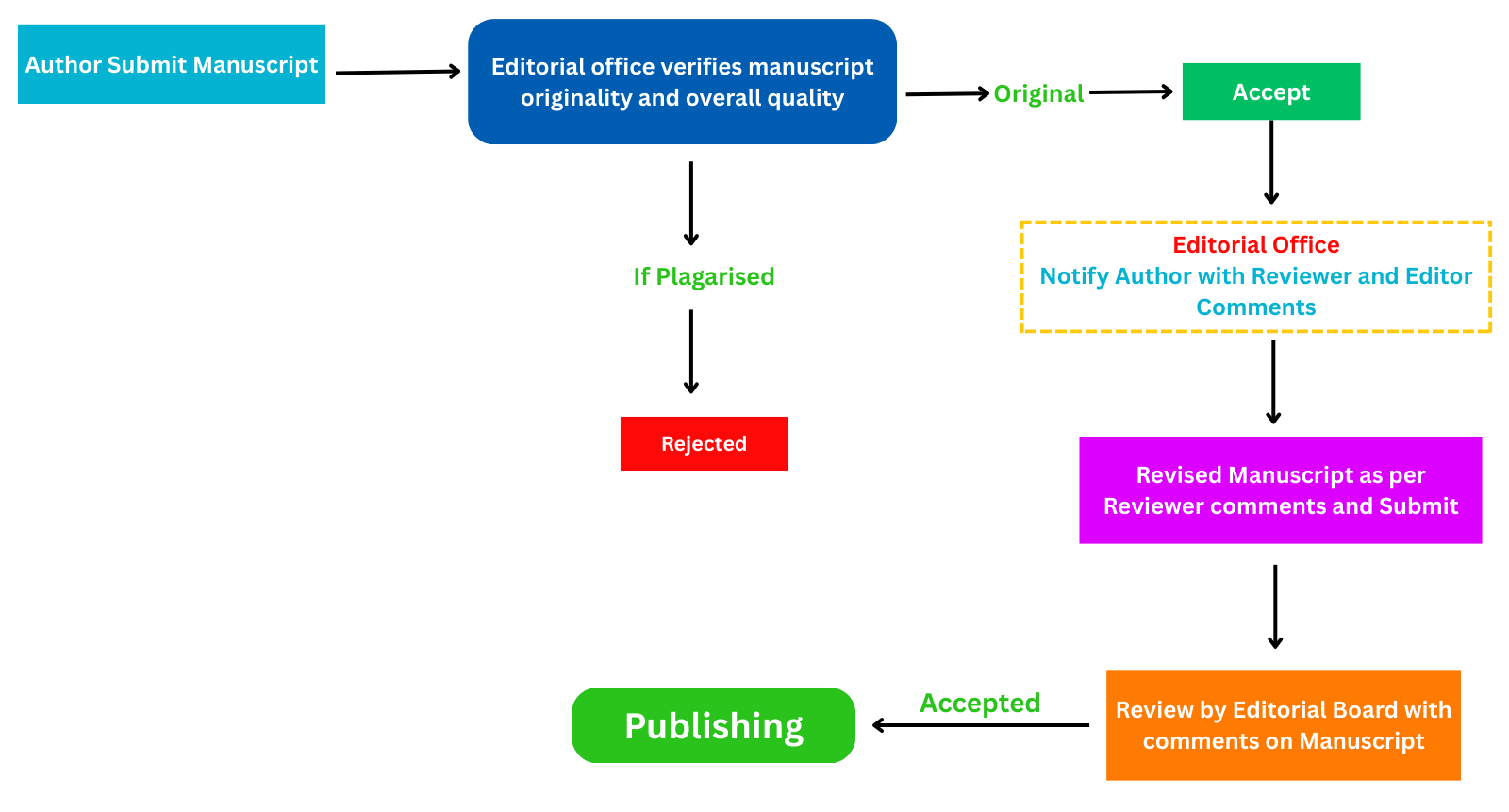
Manuscript Submission
Authors submit their manuscripts through the Confseries submission platform. All submissions must
comply with the journal's scope, author instructions, and ethical standards.
Editorial Office Initial Check
Each new submission undergoes an initial assessment by the editorial office to confirm:
Manuscripts identified as containing substantial plagiarism, duplicate submission, or serious ethical concerns are rejected during the initial editorial assessment without external peer review.
Manuscripts meeting the journal's initial editorial requirements proceed to the peer-review stage.
After passing the initial screening:
Reviewer Assessment
Reviewers critically evaluate each manuscript based on:
Editorial Decision
Based on reviewer feedback and editorial evaluation, one of the following decisions is issued:
Revision and Re-evaluation
For manuscripts requiring revision:
Acceptance and Publication
Manuscripts accepted for publication proceed to the production phase, which includes:
Ethical and Editorial Integrity
The journal's peer-review workflow reflects a transparent, ethical, and structured editorial process, ensuring that every manuscript is evaluated fairly, objectively, and on its scientific merit before publication.