
Editor-in-Chief
Full Professor Former Dean
Faculty of Medical Dentistry
Apollonia University of Iasi
Romania




Editor-Member
Assistant Lecturer
Department of Chemistry
University of Anbar
Iraq

Editor-Member
Professor Consultant of Molecular Diagnostics and Medical Biotechnology
Medical Biotechnology
King Abdulaziz University (KAU)
Saudi Arabia

Editor-Member
Department of Diagnostic and Therapeutic Technologies
Instituto Politécnico de Bragança
Portugal

Editor-Member
Faculty of Pharmacy
Faculty of Pharmacy, Minia University
King Khalid University
Egypt

Editor-Member
Professor
Faculty of Pharmacy
University of Medicine, Pharmacy, Science and Technology of Targu Mures
Romania
The Journal of Pharma and Drug Innovation (JPDI) is an international, peer-reviewed, open-access journal that publishes high-quality research in pharmaceutical sciences and drug development.
The journal provides a platform for researchers, academicians, pharmacists, and healthcare professionals to share scientific findings and advancements in areas related to drug discovery, development, and therapeutic applications. It supports the dissemination of research that contributes to both fundamental understanding and applied aspects of pharmaceutical sciences.
JPDI covers a broad range of topics including pharmacology, pharmaceutics, pharmacognosy, medicinal chemistry, drug design and delivery, pharmaceutical biotechnology, regulatory science, toxicology, and clinical pharmacy. The journal also encourages interdisciplinary research integrating pharmacy, medicine, chemistry, and life sciences.
The journal publishes original research articles, review articles, short communications, and case studies. All submissions undergo an initial editorial assessment followed by a rigorous peer review process to ensure scientific quality, originality, and relevance.
JPDI operates under an open access model, providing unrestricted access to published content to support the global dissemination of scientific knowledge and research.
Authors may submit their manuscripts through the online Submit Manuscript system or by sending their manuscript as an e-mail attachment to the Editorial Office at editorialoffice@confseries.net.
The Journal of Pharma and Drug Innovation (JPDI) is dedicated to advancing high-quality scholarly research in pharmaceutical sciences and drug development. The journal publishes original research articles, review articles, short communications, and case studies related to drug discovery, formulation science, pharmacological evaluation, and therapeutic research.
JPDI focuses on emerging developments in drug delivery systems, pharmaceutical chemistry, pharmacokinetics, regulatory science, and pharmaceutical biotechnology, with the aim of facilitating the translation of research findings into clinical practice and pharmaceutical applications.
The journal welcomes interdisciplinary contributions that integrate pharmacy, medicine, chemistry, biotechnology, and life sciences to address current challenges in pharmaceutical research and clinical therapeutics.
Areas of interest include:
Through the dissemination of high-quality, evidence-based research, JPDI aims to advance p...
View More →| Journal Title | Journal of Pharma and Drug Innovation |
|---|---|
| ISSN | Updated Soon |
| Frequency | Annual (One issue per year) |
| Starting Year | 2026 |
| Publication Format | Online |
| Language | English |
| Publisher | Confseries Publishing |
| Editor-in-Chief | Leonard-Ionut Atanase |
| Subject | Medical Sciences |
| support@confseries.com | |
| Mobile Number | +91 9666 822 625 |
| Website | https://www.confseries.com/journals/pharmainnov |
| Publisher Address | #58-15-30/3, Shantinagar, NAD-X-Road, Visakhapatnam, Andhra Pradesh - 530009, India. |
The journal follows a structured editorial and peer-review process designed to ensure academic quality, ethical integrity, and a transparent publication process. Each manuscript progresses through clearly defined stages, as illustrated in the workflow below.
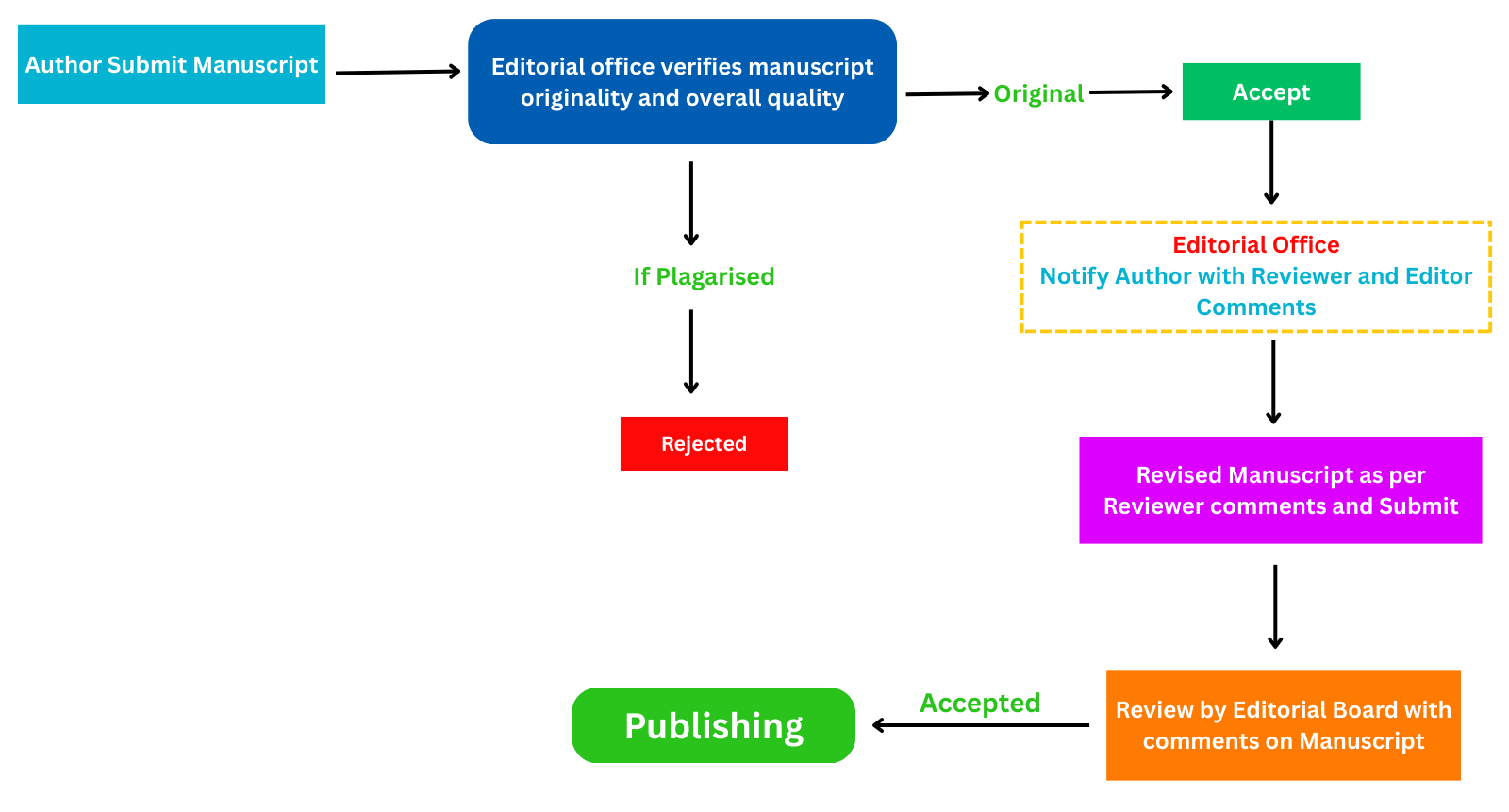
Manuscript Submission
Authors submit their manuscripts through the Confseries submission platform. All submissions must
comply with the journal's scope, author instructions, and ethical standards.
Editorial Office Initial Check
Each new submission undergoes an initial assessment by the editorial office to confirm:
Manuscripts identified as containing substantial plagiarism, duplicate submission, or serious ethical concerns are rejected during the initial editorial assessment without external peer review.
Manuscripts meeting the journal's initial editorial requirements proceed to the peer-review stage.
After passing the initial screening:
Reviewer Assessment
Reviewers critically evaluate each manuscript based on:
Editorial Decision
Based on reviewer feedback and editorial evaluation, one of the following decisions is issued:
Revision and Re-evaluation
For manuscripts requiring revision:
Acceptance and Publication
Manuscripts accepted for publication proceed to the production phase, which includes:
Ethical and Editorial Integrity
The journal's peer-review workflow reflects a transparent, ethical, and structured editorial process, ensuring that every manuscript is evaluated fairly, objectively, and on its scientific merit before publication.