Journal of Grain Research and Technology

Now Accepting Manuscripts Annual (One issue per year) Open Access Single-Blind Peer Review
Editorial & Review Timeline
3 - 4 Days Initial Quality Review
20 Days Peer Evaluation Summary
30 - 45 Days Complete Editorial Processing Time

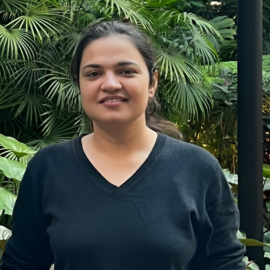
Dr Maryam Razzaq

Ph.D

  • Affiliation: University of Agriculture, Faisalabad UAF, Pakistan
  • Department: Department of Agronomy Seed Science and Technology
  • University: University of Agriculture,Pakistan
  • Email: 2019ag1393@uaf.edu.pk
  • Country: Pakistan

Maryam Razzaq is a plant scientist and Ph.D. candidate at the University of Agriculture, Faisalabad, Pakistan, specializing in Seed Science and Technology. Her research focuses on seed physiology, seed longevity, crop improvement, plant breeding, stress ecology, and sustainable agriculture. She has extensive experience in seed priming, dormancy, quinoa seed biology, cereal crop improvement, and genomic approaches for enhancing plant resilience under environmental stresses.

She has served as a Research Associate in the Seed Physiology Laboratory at the University of Agriculture, Faisalabad, and has contributed to peer-reviewed research articles, book chapters, international conferences, and collaborative research projects. Her expertise includes seed technology, plant genetics, bioinformatics, GWAS, and crop adaptation strategies. She is committed to advancing agricultural research through innovative, interdisciplinary, and internationally collaborative approaches that support global food security and sustainable grain production.

  • Research Associate, Seed Physiology Laboratory, University of Agriculture, Faisalabad.
  • Teaching Assistant, Department of Plant Breeding and Genetics.
  • Reviewer for Cereal Research Communications (2023–2025).
  • Founder of SeedCodeOn.
  • Member, International Society for Seed Science.
  • Participated in CIMMYT Wheat Improvement Programs.
  • Presented research at international conferences in Brazil and Germany.
  • Organized and participated in international seed science workshops and symposiums.

  1. Wijerathna-Yapa, A., Bishnoi, R., Ranawaka, B., Magar, M. M., Rehman, H. U., Bharad, S. G., Michal, T. L., Ramtekey, V., Gohar, S., Lata, C., Harun-Or-Rashid, M., Razzaq, M., Sajjad, M., & Basnet, B. R. (2024).
    Rice–Wheat Comparative Genomics: Gains and Gaps.
    The Crop Journal.
  2. Akram, A., Abbasi, K. Y., Shahzad, M., Razzaq, M., Alharby, H. F., Alamri, A. M., Majrashi, A., Alabdallah, N. M., & Rehman, H. (2026).
    Nutripriming in Carrot Seeds Enhances Tolerance to Germination and Seedling Growth under Abiotic Stress Conditions through Enhanced Antioxidant Capacity.
    Seed Science and Technology, 54(2), 225–240.
  3. Razzaq, M., Hayat, U., Kamran, M., & Afzal, I. (2023).
    Molecular Understanding of Seed Priming Approaches for Combined and Multiple Stresses Tolerance.
    In Multiple Abiotic Stress Tolerances in Higher Plants. CRC Press.
  4. Usman, M., Razzaq, M., Khan, R. A. R., Rehman, M. A., Ali, M. M., Gull, S., et al. (2022).
    Factors Affecting Postharvest Losses of Sesame (Sesamum indicum L.) and Their Mitigation Strategies.
    Agronomy, 12(10), 2470.
  5. Javed, T., Shabbir, R., Tahir, A., Ahmar, S., Mora-Poblete, F., Razzaq, M., et al. (2023).
    Etiology, Epidemiology, and Management of Maize Diseases.
    In Cereal Diseases: Nanobiotechnological Approaches for Diagnosis and Management. Springer Nature.
  6. Khan, R. A. R., Ali, M. U., Chand, S., Razzaq, M., Latif, M. U., Amjid, M., & Afzal, I. (2023).
    Antidiabetic Properties of Chenopodium quinoa on Human Health: An Update and Future Prospects.
    One Health Triad, 2, 168–175.