





Editor-Member
Associate Professor
Physiology
Mazandaran University of Medical Sciences
Iran
The Journal of Advanced Psychiatric Research is a peer-reviewed, open-access publication dedicated to advancing scientific knowledge and clinical understanding across contemporary psychiatry and mental health research. The journal provides a multidisciplinary forum for investigating the complex mechanisms, manifestations, assessment, and management of psychiatric conditions across diverse populations and stages of life.
The journal welcomes research addressing emerging and established areas of psychiatric science, including affective and anxiety-related conditions, schizophrenia and other psychotic disorders, personality disorders, neurodevelopmental and cognitive disorders, addiction and substance-related conditions, and behavioral and emotional disturbances. Particular emphasis is placed on research exploring the interplay between neurobiological mechanisms, psychological processes, genetics, environmental influences, social determinants, and broader factors that shape mental health and psychiatric outcomes.
In addition to original research, the journal considers systematic and narrative reviews, clinical case reports, brief communications, perspectives, editorials, and other scholarly contributions that offer meaningful insights into psychiatric practice and research. Topics may encompass innovative diagnostic approaches, therapeutic interventions, psychopharmacology, psychotherapy, prevention strategies, digital and emerging technologies, patient-centered care, and developments in mental health policy and services.
Through the exchange of rigorous scientific evidence and interdisciplinary perspectives, the Journal of Advanced Psychiatric Research seeks to support researchers, psychiatrists, psychologists, clinicians, educators, healthcare professionals, and policymakers. Its broader mission is to encourage innovative thinking, strengthen evidence-based psychiatric practice, and contribute to improved mental health care and outcomes worldwide.
Authors may submit their manuscripts through the online Submit Manuscript system or by sending their manuscript as an e-mail attachment to the Editorial Office at editorialoffice@confseries.net.
The Journal of Advanced Psychiatric Research is an international, peer-reviewed, open-access journal focused on emerging knowledge, scientific discoveries, and clinical developments in psychiatry and mental healthcare. It provides a multidisciplinary forum for researchers and healthcare professionals to present innovative findings concerning the causes, mechanisms, assessment, prevention, and management of psychiatric and behavioral conditions.
The journal recognizes that mental health is influenced by a dynamic interaction of neurobiological, genetic, psychological, behavioral, environmental, cultural, and social factors. Accordingly, it encourages research that examines psychiatric disorders from multiple scientific and clinical perspectives and supports the development of more effective approaches to diagnosis, intervention, recovery, and long-term care.
The journal considers original research, clinical investigations, systematic and narrative reviews, meta-analyses, case reports, brief reports, perspectives, editorials, methodological contributions, and other scientifically relevant articles. Contributions that introduce novel therapeutic strategies, diagnostic techniques, biomarkers, digital approaches, service models, or translational findings are particularly welcomed.
The Journal of Advanced Psychiatric Research seeks to connect fundamental psychiatric science with practical healthcare applications. It encourages collaboration among psychiatry, psychology, neuroscience, pharmacology, be...
View More →| Journal Title | Journal of Advanced Psychiatric Research |
|---|---|
| ISSN | 3139-9223 Online ISSN |
| Frequency | Bi-Annual (Two issues per year) |
| Starting Year | 2026 |
| Publication Format | Online |
| Language | English |
| Publisher | Confseries Publishing |
| Editor-in-Chief | Sam Vaknin |
| Subject | Psychology |
| support@confseries.com | |
| Mobile Number | +91 9666 822 625 |
| Website | https://www.confseries.com/journals/psychiatricresearch |
| Publisher Address | #58-15-30/3, Shantinagar, NAD-X-Road, Visakhapatnam, Andhra Pradesh - 530009, India. |
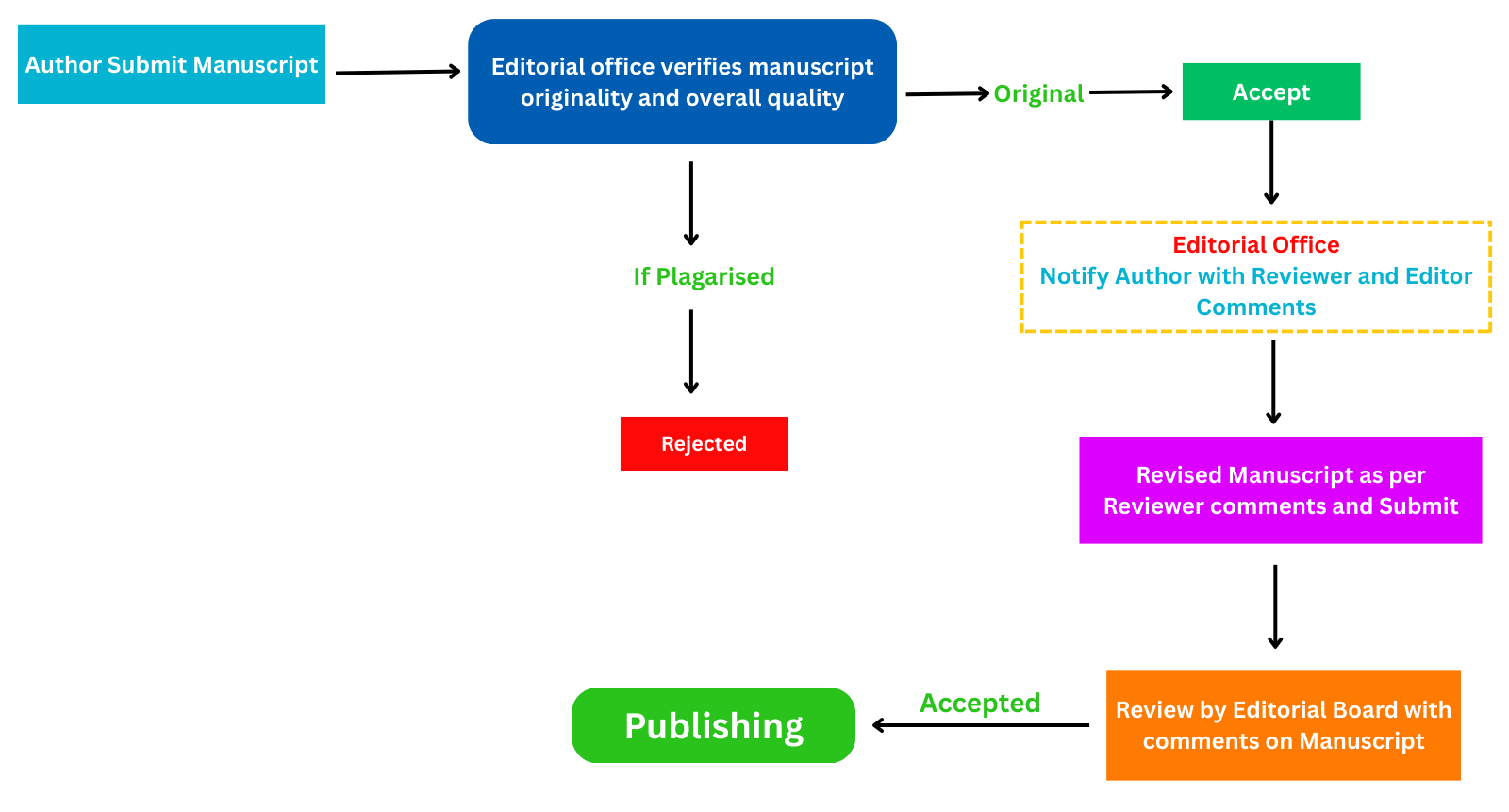
The journal follows a structured editorial and peer-review process designed to ensure academic quality, ethical integrity, and a transparent publication process. Each manuscript progresses through clearly defined stages, as illustrated in the workflow below.
Manuscript Submission
Authors submit their manuscripts through the Confseries submission platform. All submissions must
comply with the journal's scope, author instructions, and ethical standards.
Editorial Office Initial Check
Each new submission undergoes an initial assessment by the editorial office to confirm:
Manuscripts identified as containing substantial plagiarism, duplicate submission, or serious ethical concerns are rejected during the initial editorial assessment without external peer review.
Manuscripts meeting the journal's initial editorial requirements proceed to the peer-review stage.
After passing the initial screening:
Reviewer Assessment
Reviewers critically evaluate each manuscript based on:
Editorial Decision
Based on reviewer feedback and editorial evaluation, one of the following decisions is issued:
Revision and Re-evaluation
For manuscripts requiring revision:
Acceptance and Publication
Manuscripts accepted for publication proceed to the production phase, which includes:
Ethical and Editorial Integrity
The journal's peer-review workflow reflects a transparent, ethical, and structured editorial process, ensuring that every manuscript is evaluated fairly, objectively, and on its scientific merit before publication.